


How Strap Design Reduces Neck Strain: Make Long VR Sessions Comfortable (Meta Quest 2 & Similar)
Anyone who’s played more than an hour in VR has felt it: the slow burn at the base of your skull, the urge to loosen the straps, the nagging ache that turns a great session into a short one. Much of that discomfort isn’t inevitable — it’s a design problem. A headset’s weight and where that weight sits relative to your neck determine how hard your muscles must work to hold your head upright. ⏱️ 10-min read
This article walks through the physics behind neck strain, how strap designs have evolved to fight it, which strap features matter most, and practical options for Meta Quest 2 and similar headsets. You’ll get step-by-step fitting advice, accessory ideas to rebalance weight, and a look at the future of “weightless” VR so you can enjoy longer, less painful sessions.
Understanding the Root Cause: Why VR Headsets Strain Your Neck
At its simplest, neck strain from VR comes down to torque. Your neck acts like a pivot, and the headset’s mass sits in front of that pivot. The farther forward the headset’s center of gravity, the larger the moment arm and the more muscular torque your neck must produce to keep your head and eyes steady. Even a modest forward bias — a few ounces placed several inches ahead of the ear line — compounds rapidly over a long session.
User posture amplifies the problem. Slouching, pushing the chin forward to look at controllers, or craning to read a tiny HUD shifts the center of mass even farther from the neck pivot. Small, repeated habits — leaning in to inspect a virtual object, constantly snapping your gaze down — turn short-term fatigue into persistent soreness, tender spots around the upper spine, headaches, and even tendon or joint irritation over time.
Strap design directly affects this leverage. A strap that anchors a headset’s load high on the crown and supports the rear of the skull reduces the forward moment by distributing weight across a larger surface area. Conversely, a flimsy fabric strap that concentrates load on the forehead increases pressure points and forces the neck to do the heavy lifting.
The Evolution of VR Head Straps: From Basic to Ergonomic
Early headset straps were functional but minimal: elastic bands or simple two-strap setups that clung to the forehead and temples. They were cheap and easy to manufacture, but they funneled most of the device’s weight onto a few small contact points. Slipping, hotspots, and frequent micro-adjustments were common, and fatigue was the principal sign that the design had reached its limit.
Designers responded by taking the load off the face. The rigid halo strap was a major leap: a curved frame that cradles the crown and wraps to the occipital area (the back of the skull). Instead of pressing the visor into your face, halo systems spread pressure across the upper head and rear cradle, holding the display in place with less facial compression. That change alone makes a surprisingly big difference in perceived weight.
More recent iterations add multi-point adjustment and rear counterweight pockets. Rigid or semi-rigid materials maintain shape and keep alignment stable during motion, while top straps and ratchet dials let you tune lift and tension. The result is a family of ergonomic solutions that trade a bit of complexity for substantial improvements in comfort and immersion — the difference between a headset you tolerate and one you forget you’re wearing.
Key Strap Design Elements for Superior Comfort
When you evaluate straps, think of four interlocking elements: padding, adjustability, balance, and materials. Each plays a specific role in shifting load away from pressure points and reducing the neck’s workload.
- Padding and contact area: Wider, denser padding spreads pressure across a larger surface. A narrow strip digs; a broad cradle cushions. Look for foam that compresses evenly and recovers, and covers that reduce skin irritation during long use.
- Multi-point adjustment: Micro-adjustments — ratchet dials, indexed sliders, or graduated Velcro with multiple anchor points — let you tune tension precisely. Small wins matter: a millimeter change at the crown can remove a hotspot at the temple.
- Balanced weight distribution: Designs that move mass upward and rearward reduce the forward moment. Top straps transfer some load to the crown; rear cradles or counterweight pockets reposition mass behind the neck pivot where muscles are better suited to bear it.
- Durable, breathable materials: Breathable mesh and moisture-wicking covers keep sweat from turning a good fit into a slippery one. Stiff plastics or reinforced polymer give the strap its structure; fabric alone rarely does.
Combined, these features minimize concentrated pressure points, reduce slipping and wobble, and lower the static torque your neck must counteract. In practice, a strap with good padding and a rear cradle will convert a headset’s forward pull into a more neutral sensation, often felt as “it just sits there” rather than “it’s dragging my face down.”
Top Comfort Strap Options for Meta Quest 2 and Similar Headsets
Upgrading the stock fabric strap on a Meta Quest 2 is one of the fastest ways to improve long-session comfort. Several aftermarket and official options offer tangible improvements; here’s how they differ and which fit common needs.
The official Meta Quest 2 Elite Strap (and its Elite Strap with Battery) brings a rigid backbone and optional battery. Its plastic frame holds shape and reduces facial pressure; the battery option provides targeted rear weight that balances the headset. Installation is straightforward — swap the stock band and secure the Elite’s attachment points — and it’s especially useful if you want a low-friction, stable solution without third-party tinkering.
Third-party halo designs like the BoboVR M2 Pro shine by combining a cradle-style rear support with an integrated battery pack. The M2 Pro’s halo distributes weight across the occiput and crown and uses the battery as a purposeful counterweight. That makes a noticeable difference if your sessions exceed an hour and you want built-in power for extended play.
Kiwi Design and similar comfort straps focus on plush padding and wide support surfaces. These often use softer, thicker foam and broader rear cradles for users who prioritize cushioning over a rigid frame. They’re a strong match for glasses-wearers: the added clearance and softer contact reduce pressure against the temple arms and bridge of the nose.
When choosing, consider installation, headset compatibility, and your use case. Gamers who move intensely will benefit from rigid halo systems for stability; casual users and those sensitive to pressure may prefer wider-padded cradles. If you wear glasses, look for straps that offer extra clearance and gentle side padding to avoid temple pressure.
Beyond the Strap: Enhancing Comfort with Weight Balance Accessories
Straps reduce strain by redistributing the headset’s mass, but accessories can fine-tune that balance further. Small changes in where weight sits can dramatically lower perceived headset weight and neck torque.
External counterweights are a low-cost, high-impact fix. Attaching a battery pack or weighted pouch to the rear of the strap shifts the center of gravity toward the skull’s rear — the area better equipped to bear load. Many aftermarket straps include a battery pocket for this reason; a 200–300 g battery placed close to the occiput will offset the headset’s front-heavy tendencies and add playtime simultaneously.
DIY options are effective when you’re testing balance before committing to a purchase. Velcroed fishing weights, wrapped coins, or a small power bank are simple, reversible ways to find the sweet spot. Just secure them so they won’t swing or shift during movement; dynamic weights can feel worse than none.
For users seeking a more integrated approach, modular counterweight systems — small pouches that attach to strap anchors — provide neat, adjustable ballast without bulk. Combine them with gels or additional rear padding to fine-tune comfort. If battery life and balance are both priorities, choose a rear-mounted battery pack designed to sit low and close to your head rather than dangling from the strap, which could increase leverage.
Master Your Fit: Installation and Adjustment for Optimal Comfort
A premium strap only works if you tune it correctly. Follow this practical sequence to install and adjust a comfort strap for secure, pressure-free wear.
- Start with the top strap: mount the headset and position the top strap so it sits evenly over your crown. This strap does much of the vertical lift; set it so the headset doesn’t dip forward but also doesn’t pull the crown painfully tight.
- Set the rear cradle: adjust the rear support so it nestles against the occipital bone (the lower rear skull) without causing wobble. The cradle should feel like the headset is being hung, not clamped.
- Tune lateral tension: use side sliders or dials to center the optics over your eyes. A centered fit prevents you from compensating with neck posture and reduces eye strain.
- Check IPD and image clarity: a correct interpupillary distance keeps you from leaning forward to clear the image. Adjust IPD until you get a crisp, single picture; this will let you maintain a neutral head position.
- Do a mobility test: perform a few VR movements — look left/right, nod, crouch. If the headset shifts, tighten incrementally until stable but not tight. Stability prevents repetitive micro-corrections that fatigue neck muscles.
- Assess pressure points: after five minutes, check for red marks at the nose bridge, temples, or cheeks. If marks appear, ease tension or add a thin pad to redistribute pressure.
- Plan breaks: schedule a short break every 45–60 minutes. Even with an optimal fit, muscles benefit from periodic rest and gentle neck stretches.
Remember: snug is secure; tight is painful. The goal is a fit that feels stable without needing to clamp down — when the headset feels like it’s supported by the crown and rear cradle, your neck is doing much less work.
Advanced Solutions: The Future of Weightless VR Immersion
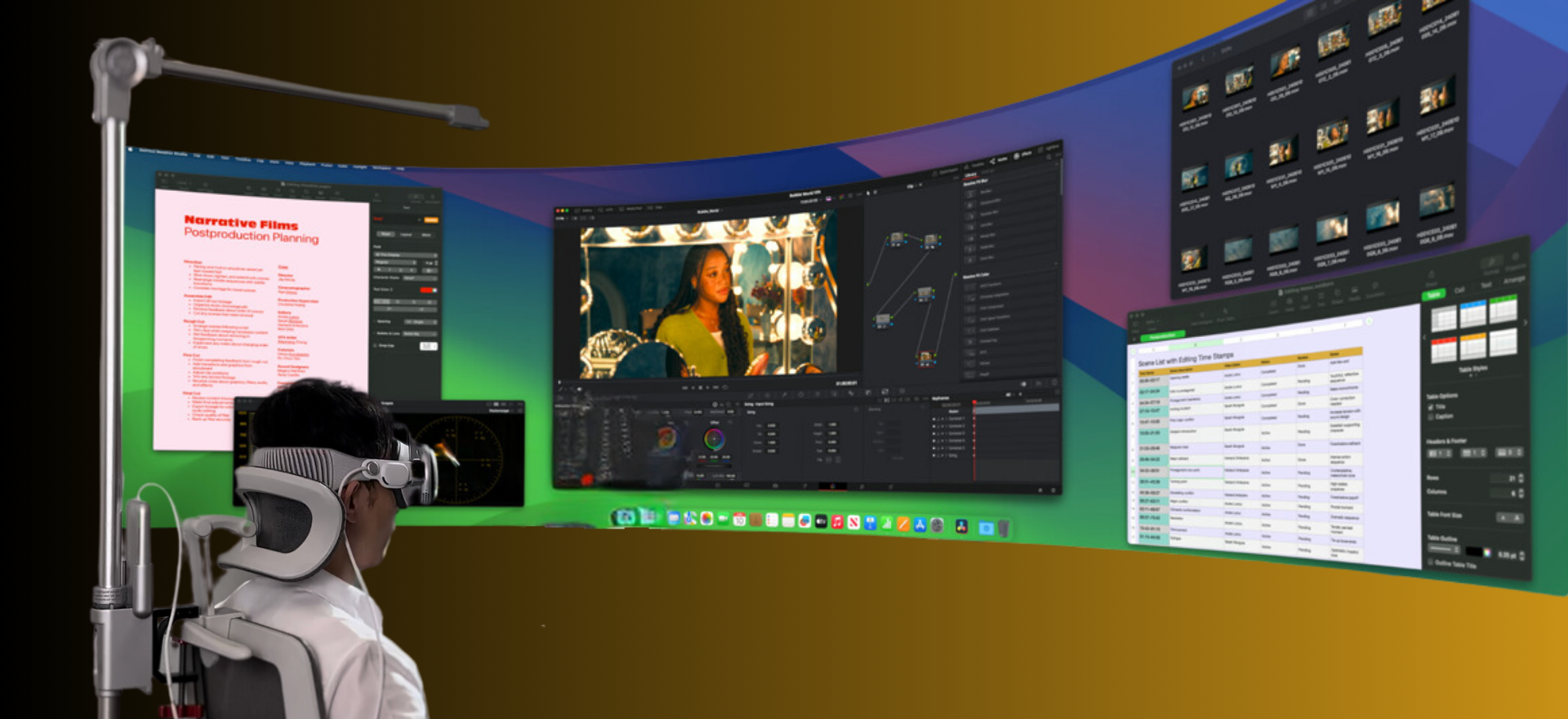
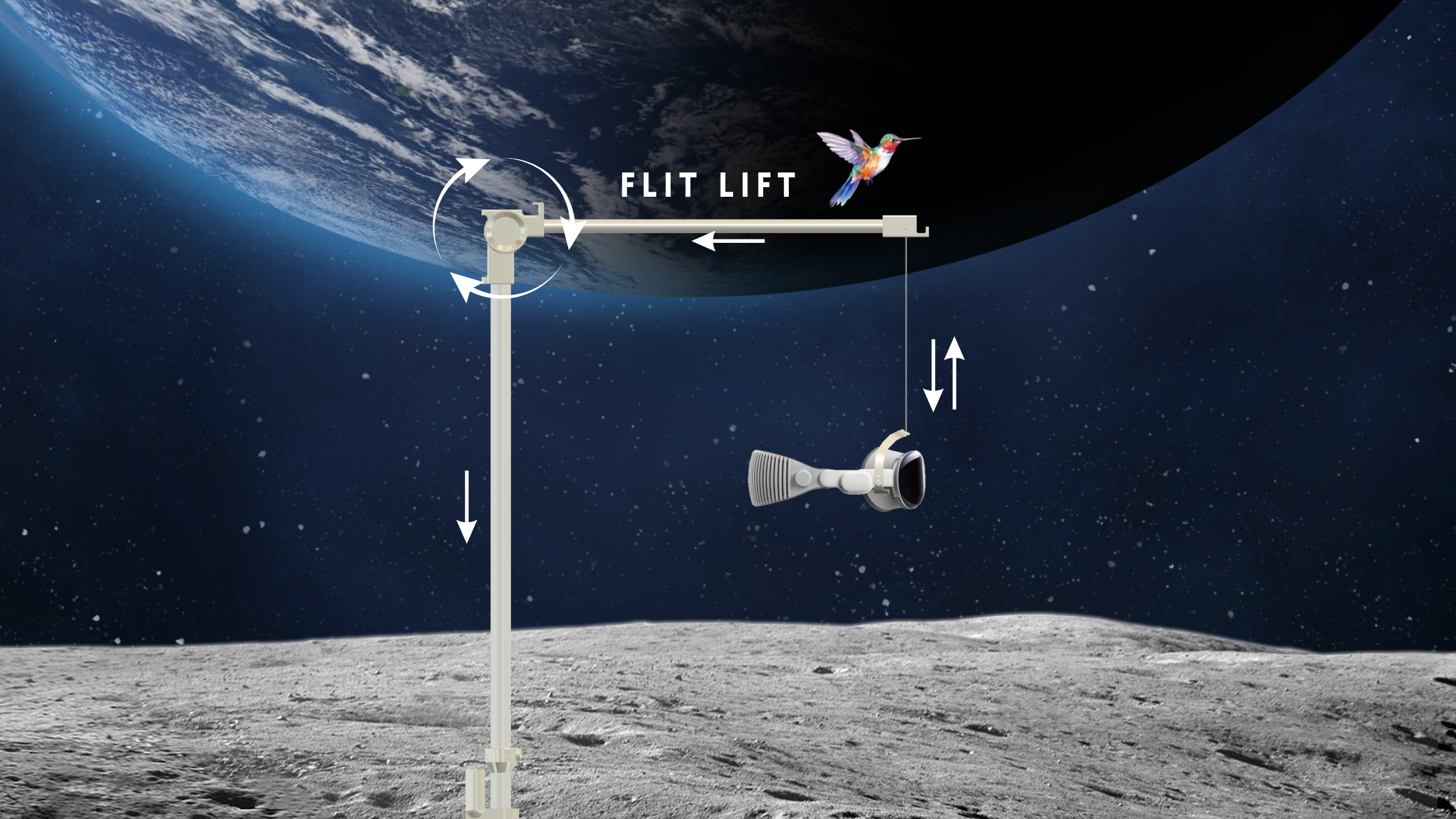
For professional users and avid enthusiasts who want truly long, weightless experiences, overhead and dynamic support systems are becoming viable. These solutions take the headset’s mass off the head entirely, either by suspending it from above or by providing an active lift that compensates for movement.
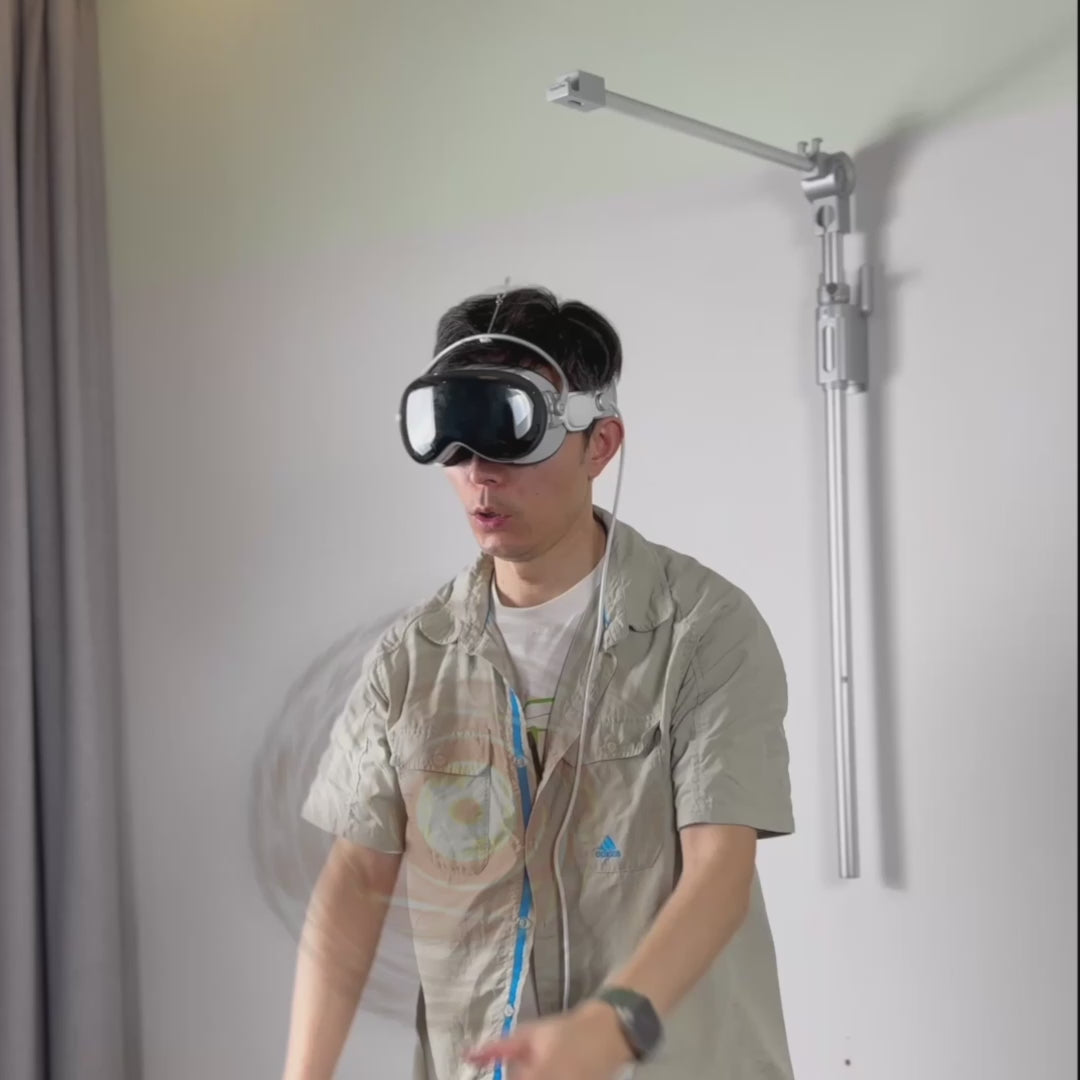
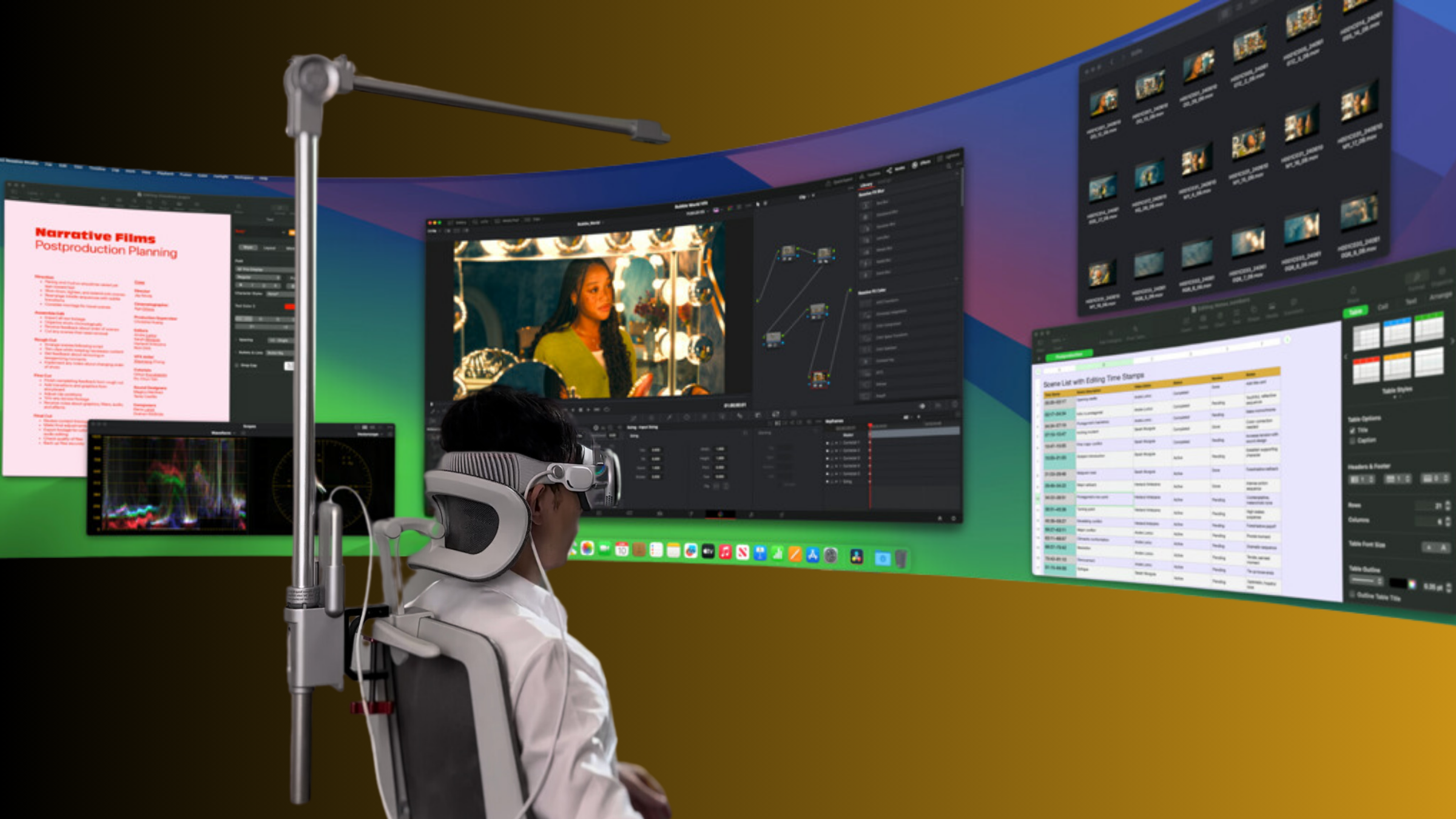
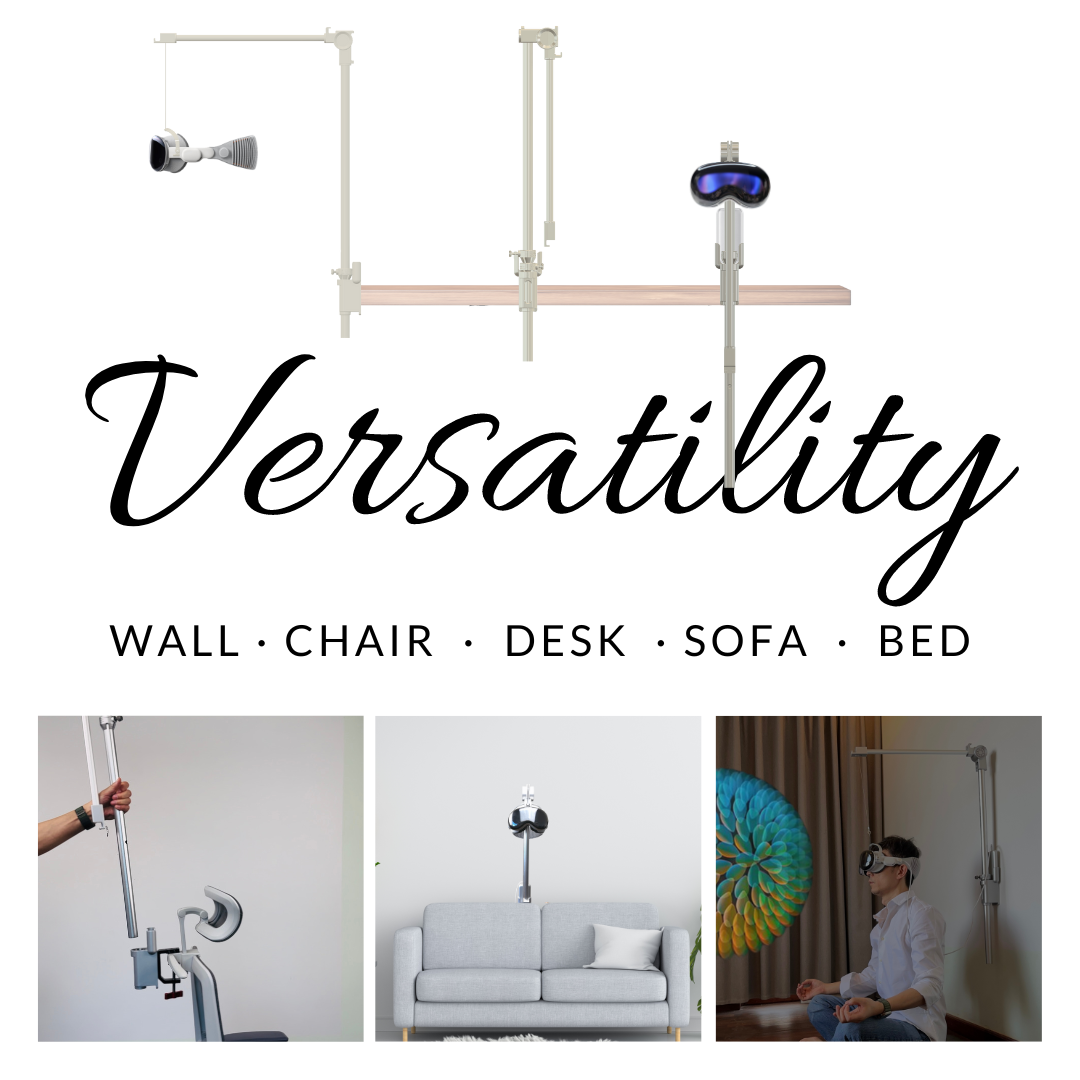
One example is the FlitLift GraviPro Vision Pro Lift Stand, which uses a dynamic lifting arm to support the headset while allowing natural head movement. Mounted overhead or on a nearby stand, these systems create a “zero-gravity” feel: you get full freedom to look and move without any load on your neck. For extended training, simulation, or development sessions, that can be transformative — not just more comfortable, but enabling longer focus without cumulative strain.
Beyond stands, emerging ideas include haptic-enabled straps that subtly shift load in real time. Tiny actuators and soft actuating materials could redistribute weight dynamically as you move, reducing peak moments of torque. Simultaneously, optics and materials are getting lighter: pancake lenses, micro-OLED displays, and carbon-fiber-reinforced frames reduce front mass at the source.
Personalization will also play a role. 3D head scanning coupled with AI fitting software can map your skull and tune pressure zones, strap tension, and pad thickness for a custom, near-zero-pressure fit. These technologies, once expensive, are moving toward consumer accessibility and will redefine comfort norms for long-session VR.
For now, pairing a well-designed halo or rear-cradle strap with a rear-mounted battery or a quality lift stand achieves the largest immediate gains. If you want to push comfort further, explore dynamic lift systems like the GraviPro and keep an eye on lightweight optical systems that reduce the problem at its root.
Takeaway: start with a strap that moves weight upward and rearward, fine-tune the fit using the steps above, and add a rear counterweight or an overhead support system if you consistently play for hours. Small adjustments in how mass is distributed translate to big reductions in neck torque — and a much more enjoyable VR experience.
Share:
Comparing strap ergonomics: comfort straps versus standard straps on Quest headsets
Battery Pack Compatibility on Meta Quest Two: What Attaches Safely