

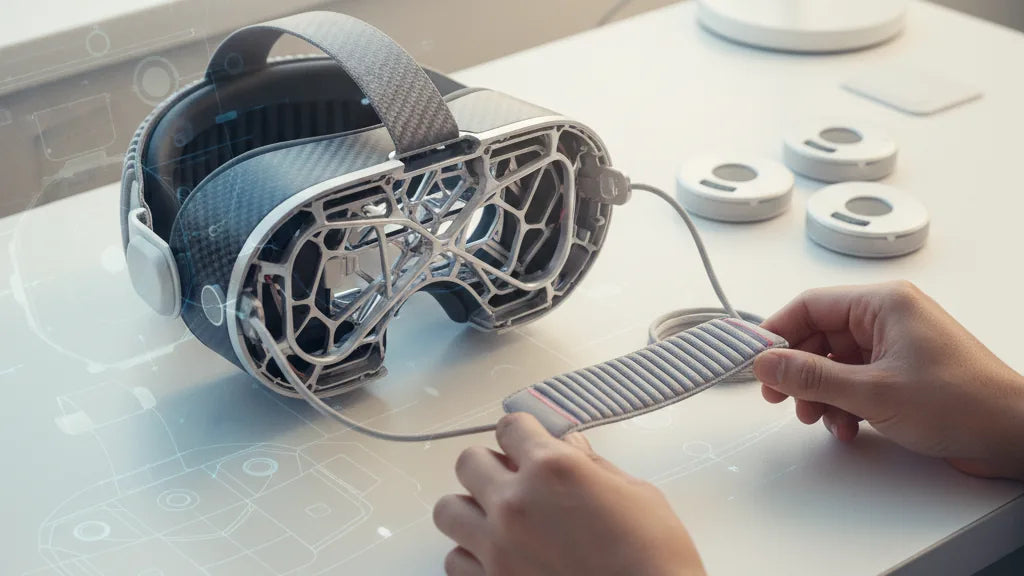
Designing a lightweight VR headset is not a cosmetic exercise — it’s an engineering challenge that touches materials science, structures, ergonomics, electronics, and manufacturing. For product teams working on Quest 2–class devices, Vision Pro–style premium headsets, or next‑generation wearables, shaving grams translates directly to longer sessions, fewer complaints about neck strain, and a clearer line to mass adoption. ⏱️ 10-min read
This article walks through practical, engineering‑first approaches: which materials deliver the best strength‑to‑weight payoff, how topology and lattice cores remove unnecessary mass, how strap geometry and center‑of‑gravity tuning change perceived weight, and where batteries and thermal systems belong. You’ll find concrete trade‑offs, prototyping tips, and modular strategies you can apply immediately to reduce on‑head mass while preserving optics alignment, impact resistance, and user comfort.
Materials that cut mass without sacrificing strength
Start by treating materials selection as a systems decision: the shell, frame, internal mounts, and contact surfaces each have different requirements for stiffness, impact resistance, thermal conductivity, and skin safety. Carbon fiber reinforced polymers (CFRP), magnesium alloys, and high‑performance thermoplastics (PC‑ABS blends, PEEK, PPS) offer radically different density‑to‑stiffness ratios than traditional aluminum or steel. CFRP delivers exceptional rigidity at low mass, letting you reduce section thickness and still maintain optical stability; magnesium alloys can shave grams from internal frames where ductility and EMI shielding are needed.
But every lightweight option has trade‑offs. Carbon fiber increases material and processing costs and can complicate EMI shielding and recyclable end‑of‑life streams. High‑temperature polymers simplify tooling and can be injection molded cheaply at scale, but they must be validated for long‑term UV, sweat, and abrasion resistance. A practical approach is hybrid construction: use CFRP or magnesium for primary load paths and optical mounts, and lower‑cost thermoplastics for non‑structural skins. This combination preserves strength where alignment matters and keeps unit cost and recyclability under control.
When specifying materials, quantify requirements: target stiffness for lens alignment, impact energy absorption for drops, allowable thermal conductivity near heat sources, and skin contact biocompatibility. Those constraints drive a balanced bill‑of‑materials that minimizes headset weight without introducing new failure modes.
Structural topology and lattice design for minimal weight
Topology optimization and engineered lattice cores are the most powerful levers to cut mass while keeping mechanical performance. Rather than applying a uniform wall thickness, topology software simulates loads across the part and removes material where it’s unnecessary, producing complex, organic geometries that are often counterintuitive but highly efficient. These optimized shapes concentrate material only in the load paths that matter — around lens mounts, strap anchors, and impact zones — saving grams elsewhere.
Lattice structures inside a shell act like a lightweight skeleton. Think honeycomb for stiffness with much less material than a solid core. Additive manufacturing (SLS for polymers, DMLS for metals) makes these internal lattices manufacturable; they provide excellent stiffness‑to‑weight and can be tuned for crush behavior to protect delicate optics during drops. Where production volumes are high, engineers can translate lattice benefits into conventional processes by designing rib patterns or foam cores that approximate the optimized stiffness.
Key practical points: run multi‑load case optimizations (drop, twist, clamp) to avoid blind spots; maintain sufficient fillet radii and manufacturing tolerances to prevent stress concentrations; and validate optimized parts with physical tests early. A common workflow is to prototype optimized shells in PA12 or CF‑PA12 using SLS, iterate on fit and stiffness, then move to hybrid production where composite layups or molded rib patterns replicate the optimized geometry at scale.
Balance and CG optimization through strap integration
Perceived weight is as important as measured mass. A 600 g headset can feel light if its center of gravity (CG) sits close to the skull’s natural pivot; conversely, a 400 g front‑heavy device will fatigue users quickly. Design the harness and strap system to be an active participant in balance, not just a retention mechanism.
First, place heavy components (battery, processor, or counterweights) toward the rear or distribute them across the crown to move the headset’s CG closer to the head’s center. Rear‑mounted batteries, either integrated into a rigid rear plate or a detachable pack on the strap, counteracts forward tipping more effectively than simply trimming front mass. Second, use a halo or crown band that transfers load across the top of the head rather than concentrating it on the forehead. Wide, padded straps spread pressure and reduce hotspots; triangulated anchor points (crown + side + rear) prevent slippage during rapid head movement.
Design for adjustability and variability: hair, glasses, and head shape influence how forces distribute. Integrate micro‑adjusters for crown height and side tension to fine‑tune the CG for different users. Quick tests: with a dummy head instrumented for tilt and pressure, measure neck moment during simulated play; adjust strap geometry to minimize peak neck torque under representative motions. Done well, strap integration reduces perceived weight more than several grams of material savings ever could.
Power, battery placement, and heat management
Battery mass is one of the largest contributors to on‑head weight. Engineering choices here have outsized ergonomic impact. Start by evaluating session length targets and power budgets: if the goal is two hours of active use, optimize for energy per gram rather than raw capacity alone. Solid‑state batteries and higher energy‑density lithium chemistries will help when available, but architectural choices — where the battery sits — can be equally transformative.
Off‑head power packs, rear‑mounted batteries in the strap, or tethered external packs can remove hundreds of grams from the visor. Rear mounting keeps power on the body but close enough to minimize cable hassle; off‑head tethers are common in enterprise and location‑based VR setups. When on‑head batteries are unavoidable, distribute multiple smaller cells across the strap to preserve balance and reduce a single heavy point.
Thermal management interacts with battery and processor placement. High‑performance SoCs generate enough heat to affect comfort and optics if not managed. Use a combination of strategies: place heat‑generating components on internal heat spreaders tied to the shell, use thin vapor chambers where space permits, design airflow channels into strap structures for passive cooling, and reserve active cooling (micro fans) for high‑power modes with careful acoustic control. Keep thermal paths away from skin contact surfaces and validate with thermal imaging during sustained workloads to ensure temperatures remain comfortable and optical alignment stays stable.
Comfort straps and pads: achieving comfort with lower mass
Comfort interfaces are the visible part of mass optimization — they’re where users feel every gram. Replace dense conventional foams with engineered, lighter materials: open‑cell polyurethane foams offer similar cushioning at lower mass and improved breathability. Gel‑infused pads or thin memory foams can provide targeted pressure relief without bulky volume. Breathable mesh covers and perforated skins reduce heat and moisture buildup, increasing perceived comfort over long sessions.
Design choices that reduce mass and improve washability also lower ownership friction. Removable facial cushions with magnet or snap attachments let users swap out heavier, thicker pads for lighter alternatives when they don’t need full isolation. For strap materials, favor webbing and lightweight composites over heavy leather or thick plastics; an Elite Strap–style rigid rear band can offload force without adding much mass if made from thin CFRP or magnesium.
Fit customization matters: include adjustable temple arms and a micro‑positioning crown adjuster so users can fine‑tune fit without overtightening. Test with a range of head sizes and use pressure mapping on the forehead, temples, and crown to ensure load spreads evenly. The end goal is maximizing comfort per gram — every material choice should be justified by a measurable reduction in peak pressure or localized temperature rise.
External accessories and modular design to shed weight
Modularity lets users choose the weight they want for a given session. A system with detachable batteries, swappable shells, and optional counterweights lets users tailor mass and balance. For example, casual app users can remove an extended battery pack and use a minimal shell; power users attach a light, high‑capacity module. Quick‑release connectors, magnetic mounts, and standardized electrical interfaces make these changes painless.
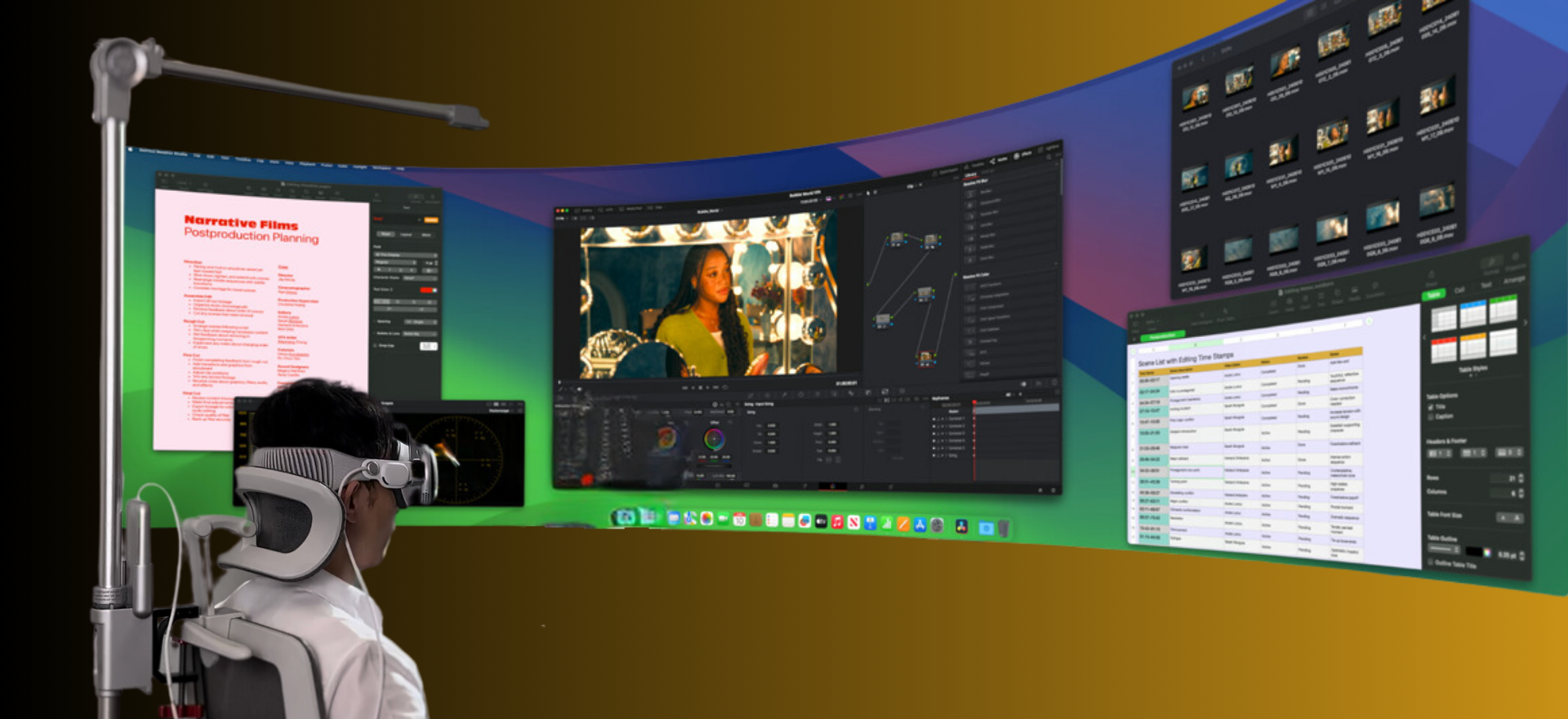
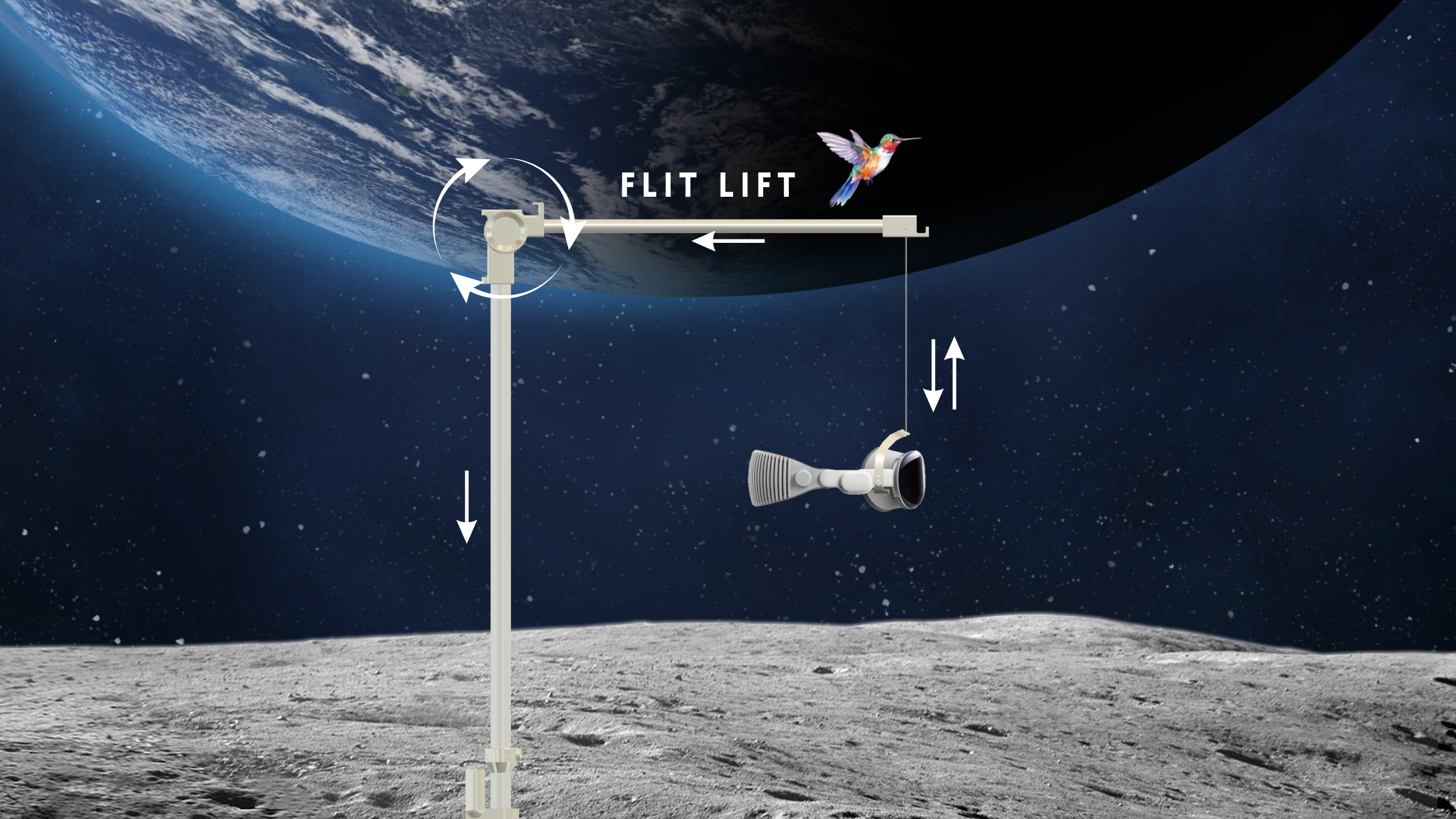
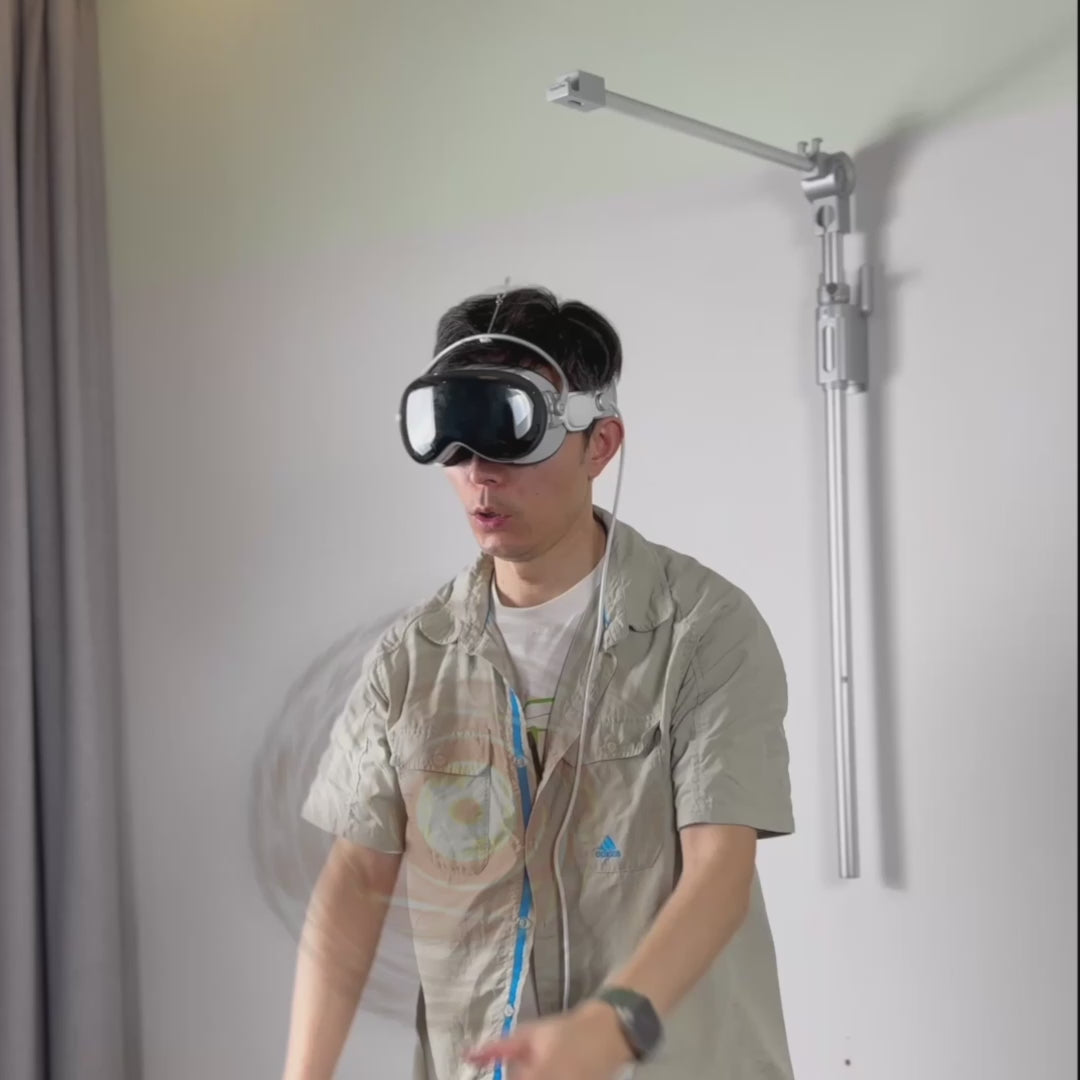
External counterweights are a simple but effective tactic. A small mass attached to the rear strap — sized and positioned to counter the front assembly — dramatically reduces neck torque. Because the counterweight is carried on the strap, it can be made larger without increasing perceived bulk at the face. Lift accessories and third‑party mounts (many developed for Quest 2) demonstrate how ecosystem accessories can offload development risk: you can validate rear‑mounted packs and strap designs using off‑the‑shelf products before committing to integrated solutions.
Modularity also supports repairability and sustainability. Allowing users to swap out worn pads, batteries, or lens assemblies extends product life and reduces total lifecycle mass when averaged across usage. When designing modular joints, prioritize secure mechanical locating and repeatable optics alignment — a lightweight detachable module should not compromise the display’s calibration.
Manufacturing, lifecycle, and cost implications for lightweight design
Lightweight materials and optimized geometries deliver performance, but they change your manufacturing playbook. Carbon fiber, magnesium, and high‑performance polymers can incur higher material costs, require new tooling, and introduce supply chain considerations. Composite layups demand controlled curing processes and skilled labor, while additive manufacturing is excellent for low‑volume, complex parts but can be expensive per unit at scale.
Plan your roadmap: prototype using SLS or DMLS to validate topology‑optimized parts, then translate successful forms into cost‑effective production via overmolding, multi‑shot injection molding, or bonded composite panels. Early supplier engagement is critical; not every contract manufacturer has the capability to scale CFRP or exotic thermoplastics reliably. Factor in cycle time changes, tighter tolerances, and testing overhead that come with thinner sections and more complex assemblies.
Consider lifecycle impacts: choose polymers with clear recyclability paths or design for disassembly so composite shells can be separated from electronics and padding. Lightweighting often helps sustainability (less material, lower shipping mass), but composite blends can complicate end‑of‑life processing. Build environmental and repairability requirements into material selection to avoid expensive redesigns later.
Step-by-step: From prototype to production with lightweight goals
Turn strategy into execution with a repeatable roadmap. Start by defining stringent, measurable goals: target total mass, comfort metrics (max forehead pressure, neck torque), drop survivability, and session thermal limits. Use topology optimization on major structural components, prototype the optimized design with PA12 or CF‑PA12 via SLS, and instrument a headform to validate CG and pressure distribution during representative motions.
- Set constraints early: optics alignment tolerance, impact energy, skin contact requirements, and target session length.
- Select candidate materials: prioritize stiffness‑to‑weight and thermal behavior; hybridize where needed (CFRP + molded thermoplastic skins).
- Run topology and multi‑load simulations; translate lattices into manufacturable ribs for injection molding if scaling.
- Prototype straps, pads, and rear battery packs; validate balance with physical testing and user trials.
- Iterate on thermal layout: move heat sources away from skin, add vapor spreaders or airflow channels, and verify with thermography under load.
- Engage manufacturing partners early to validate tooling, cycle times, and supplier capacity for composites or advanced polymers.
- Plan modularity for repairability and sustainability; design quick‑release interfaces that maintain optical alignment.
A practical target for many consumer devices is keeping the core headset (excluding detachable rear battery) under ~350 g while ensuring optical and mechanical integrity. Use rapid iterations and user testing to trade grams for real improvements in comfort rather than untested assumptions.
Case studies: Practical lessons from lightweight designs
Abstract principles become tangible in examples. Consider AeroVR Model Lite, a lightweight concept that prioritized high‑strength thermoplastics and a miniaturized optical stack to reach exceptionally low mass. Engineers used a thin CFRP inner frame only where lenses mounted, and injection‑molded PC‑ABS skins elsewhere. The result: excellent rigidity around optics and a lighter external feel that allowed users to comfortably extend session times.
Another illustrative design, Pulsar Flow, focused on integrated balance. Instead of pushing down to the last gram of front assembly, the team placed a compact battery into a rigid rear halo and used a low‑mass CFRP crown. The headset’s measured mass was moderate, but perceived weight was minimal because the CG sat close to the head pivot. Pulsar Flow shows that thoughtful mass distribution and strap geometry can beat pure weight reduction in terms of user comfort.
Both examples underscore a pattern: combine material upgrades with structural optimization and harness design. You don’t have to apply every advanced material everywhere; targeted use in optical mounts, strap anchors, and rear counterbalancing yields the biggest ergonomic wins per dollar.
Next step: pick one subsystem (shell, strap, or battery) and run a focused optimization sprint — simulate, 3D‑print, and test — to quantify real comfort improvements before scaling to the entire headset.


Compartir:
DIY Weight-Reduction Hacks for Oculus Quest Two Without Voiding Your Warranty
Top Third-Party Comfort Straps for Quest 2 Pros, Cons, and Comparisons