

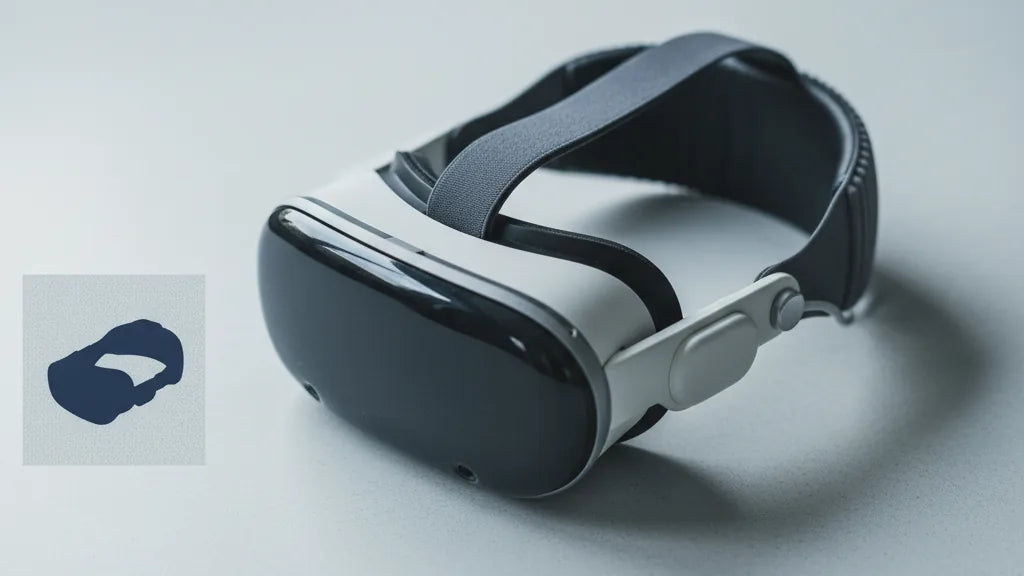
A buyer’s guide to third-party comfort straps that slash Quest 2 weight
If you love long Quest 2 sessions but hate the neck strain and forward pull, this practical guide walks you through choosing lightweight third‑party straps that improve balance and comfort—without the marketing fluff. It’s aimed at Quest 2 owners (including glasses wearers and budget shoppers) who want concrete trade-offs, step‑by‑step installs, and real tips for getting the best fit. ⏱️ 10-min read
How third-party straps reduce weight and improve balance
Third‑party Quest 2 straps shave weight by rethinking materials and removing or simplifying unnecessary hardware. Where stock or heavy OEM upgrades use dense plastics, thick padding, and bulky hinges, many third‑party options favor thin aluminum or reinforced nylon frames, micro‑foam pads, and minimalist connectors. The result: straps that can cut the headgear’s perceived front‑heaviness while reducing the total mass perched on your face.
Lightweight construction affects balance more than raw grams alone. If a lighter strap concentrates mass closer to the headset’s existing center of gravity, you’ll feel less torque on your cheeks and neck even if the total weight change is modest. Designers often accomplish this through a halo or rear‑band design that spreads load across the crown and back of the skull rather than letting the whole weight pull down on the facial interface.
Manufacturers also trim weight by simplifying adjustment mechanisms and using fewer metal parts. Replaceable Velcro, elastic tension bands, and low‑profile buckles are common choices because they weigh much less than an integrated ratchet system. Those choices can slightly reduce durability in some models, so the best lightweight straps balance reduced mass with robust anchoring points to keep fit predictable during long play.
Key factors when choosing a Quest 2 comfort strap for long sessions
Start with weight and balance. Look for a strap that lists a low net weight (many third‑party straps fall in the ~50–200 g range) and describes where that weight sits. A 100 g strap that places mass behind the head will usually feel more comfortable than a 50 g strap that adds bulk to the front. Product photos that include side and rear views, or a short video showing how the strap sits on a head, are useful indicators.
Adjustability is next: crown height, band length, and tension control let you fine‑tune fit across different head shapes and while wearing glasses. Glasses compatibility is crucial—check for cutouts or a deeper facial recess in the product description, and look for “glasses friendly” reviews. Cushioning matters too; memory foam or layered silicone face pads can reduce pressure points. But remember: heavier, thicker foam increases weight, so prioritise targeted padding at pressure points rather than blanket thick cushions.
Materials and build quality determine durability. Reinforced nylon and aviation‑grade aluminum frames offer a strong but lightweight backbone; flexible TPU or polymer anchors can reduce stress where the strap connects to the headset. Pay attention to how the strap attaches: snap‑on Velcro loops are convenient and light, while rail‑mounted brackets or bolts add security but can increase weight and complexity. Finally, consider ease of cleaning and sweat resistance, especially if you use the headset for fitness or long sessions.
Quest 2 comfort strap vs Elite Strap: what actually changes in weight, fit, and ergonomics
The official Quest 2 Elite Strap (and Elite Strap with battery) aims to increase stability and improve ergonomics compared with the stock fabric strap, but it also adds noticeable bulk and weight. Third‑party comfort straps often target the middle ground: they offer significant improvements in fit and distribution similar to the Elite Strap but with lower weight through simpler frames or lightweight materials. In practice, that means less neck fatigue for many users, though the exact effect depends on head shape and use case.
Weight-wise, the Elite Strap with battery can add a couple hundred grams—depending on the battery—while non‑battery Elite Straps sit heavier than most minimal third‑party options. Third‑party straps typically avoid integrated batteries to stay light; instead, they focus on a rear halo or counterweight pocket where you can add a small battery pack only if you want the extra runtime. This modularity is a trade‑off: you keep the strap light for standard sessions and optionally attach mass for extended play.
Ergonomics change in predictable ways. The Elite Strap’s thick rear support and single‑piece shell creates a stable platform for intense motion and social VR, which some users prefer. Many third‑party straps provide a similar halo effect with less padding and lower profile anchors—good for users who want improved balance without the added clunk of heavy plastic. Installation and compatibility differ too: Elite Straps are usually plug‑and‑play, while third‑party straps may require more careful alignment or follow different mounting methods—so expect a short learning curve during setup.
Step-by-step install guide for third-party Quest 2 straps
Before you start, gather a clean, flat workspace, a soft cloth to protect the headset, and any small tools included by the strap maker. Most third‑party straps follow a similar flow: remove the stock straps, attach the new anchors, position the halo or rear band, and test for fit. Always read the vendor’s install sheet first—small differences in clips and mounting rails can matter.
1) Remove the stock strap: gently detach the side arms by sliding or unclipping them from the fixed anchors on the Quest 2. If the strap uses a plug‑style anchor, use a slow, steady pull rather than force. Keep any small screws or clips in a container in case you want to revert to the stock strap later. Clean the contact surfaces with isopropyl alcohol to remove oils and sweat before installing new parts.
2) Attach the new anchors: align the third‑party anchor points with the headset’s mounting slots and click or screw them in according to instructions. For snap‑on systems, you should hear an audible click; for rail‑mounted brackets, hand‑tighten screws just enough to hold the part, then test alignment. Avoid over‑torquing fasteners—plastic threads strip easily and metal bolts can stress fragile mounting bosses.
3) Mount the rear band and adjust: place the halo or rear strap so it rests on your crown and the back of the skull, then secure the front anchors. Adjust tension gradually, starting loose and tightening until the headset seats evenly without compressing your face painfully. If the strap has a dial or ratchet, make micro‑adjustments and test with typical head motions to ensure stability. Finally, test for pressure points during a short gameplay session and tweak cushion position as needed.
Compatibility and integration: battery packs, accessories, and cross-compat notes with Vision Pro gear
When adding accessories, always check how the strap routes cables and positions extra weight. Many third‑party straps include a small rear pocket or clip for a battery pack; typical mobile battery packs weigh between 75 g and 200 g. If you plan to use a battery pack as a counterweight, choose something compact and secure it so it doesn’t swing during play. You can gain runtime without sacrificing balance if you position the pack low and close to the skull’s center line.
Face cushions and wireless adapters are common integrations. Thicker face cushions can increase comfort but also alter the headset’s center of gravity slightly forward—counter this by moving the rear band down the back of the skull or using a lightweight rear pad. Wireless transmitters for PC VR add both mass and heat; if you use one, confirm your strap can handle the additional weight and airflow. Always leave clearance for ventilation and avoid covering vents with padding or adhesive accessories.
About Vision Pro: Apple’s Vision Pro is a fundamentally different device and most Quest 2 third‑party straps are not interchangeable. Mounting points, dimensions, and ergonomics differ, so don’t assume cross‑compatibility. If a vendor claims Vision Pro compatibility, look for specific models and hardware revisions that explicitly support Apple’s headset. For Quest 2 accessories, focus on vendors that list Quest 2 (or Meta Quest 2) compatibility and include return policies in case of fit issues.
How to tighten, adjust, and find the best fit for long sessions
Finding the best fit is iterative. Start by establishing the crown height: the rear band should sit high enough on the crown to take load off your face but low enough that it doesn’t press into the occipital bone. A good rule of thumb is that the halo sits across the top third of your skull; if it sits too far back you’ll get chin lift, and if too far forward you’ll reintroduce cheek pressure.
Tightness matters more than you think. You want the headset snug enough that it doesn’t wobble during rapid motion but not so tight that it cuts off circulation or causes pain after 20–30 minutes. Use the strap’s fine‑tune mechanism—dial, Velcro, or buckles—to make 1–2 mm incremental changes. After each tweak, close your eyes and move your head quickly in all directions to evaluate whether the headset shifts or creates new pressure points.
Anchor points and load distribution are the final tuning knobs. If your strap offers multiple anchor slots, try moving the front anchors slightly higher or lower; the same headset will feel completely different with a half‑centimeter shift. For glasses wearers, lean back slightly to increase the facial pocket depth and reduce temple pressure; add a thinner foam insert to the face gasket if the lenses touch your frames. Always do a short trial session (10–20 minutes) before committing to long play and re‑adjust between games.
Maintenance, care, and replacement guidance for Quest 2 straps
Regular cleaning extends the life of lightweight straps. Wipe down foam and fabric parts after sweaty sessions with a mild disinfectant wipe or damp cloth and let them air dry. For deeper cleaning, remove detachable pads and hand‑wash in lukewarm water with mild soap; avoid machine washing which can deform foam. Metal or rigid parts can be wiped with isopropyl alcohol, but avoid prolonged exposure to strong solvents that might weaken plastics or adhesives.
Inspect wear points monthly. Look for fraying on fabric straps, cracked plastic near anchor points, and loosened rivets or screws. A tiny crack at a mounting boss can become a failure under load; if you spot such damage, discontinue use and replace the component. Keep spare Velcro straps or a small repair kit on hand—these inexpensive parts often fail before the structural frame does and are easy to replace yourself.
Replacement frequency depends on use. Light, casual users might keep a quality third‑party strap for two to three years; heavy daily users or those who bring their headset to LAN events may need replacements every 12–18 months. Store your headset and strap in a cool, dry place away from direct sunlight to prevent UV degradation of plastics and elastic components. When packing for travel, support the halo and avoid compressing foam pads to maintain shape.
Budget-friendly options and best practices to maximize comfort without hype
On a budget you can still get meaningful comfort improvements. Look for minimalist halo straps or lightweight rear bands that focus on balance rather than plush padding—these typically cost much less than heavy invested solutions. Popular budget strategies include buying a lightweight strap and pairing it with a low‑profile memory foam face pad, which often yields better results than an expensive fully padded strap.
How to verify claims: check verified user reviews for real‑world weight and comfort statements rather than marketing blurbs. If a product claims to reduce "front pull" or "weight by 50%," look for photos of the strap in use and measurements of net weight. Many shops provide exact gram weights—use that to compare. Pay attention to return and warranty policies; a 30‑day trial or easy returns make it much safer to test a strap’s feel with your head shape and glasses.
Finally, practical best practices: buy from sellers with clear compatibility notes for Quest 2, test the strap for at least a few 20–30 minute sessions before long marathons, and consider modularity. A strap that allows you to add or remove a small counterweight or battery gives you flexibility—keep it light for most sessions and add mass only when you need extra runtime. With a careful choice and simple tuning, a modestly priced third‑party strap can dramatically reduce neck strain and let you enjoy longer, more comfortable VR sessions.

Share:
A Beginner's Guide to Installing the Meta Quest Two Comfort Strap With Head Cushion
Official Quest 2 straps versus third-party options: which delivers best comfort and value