

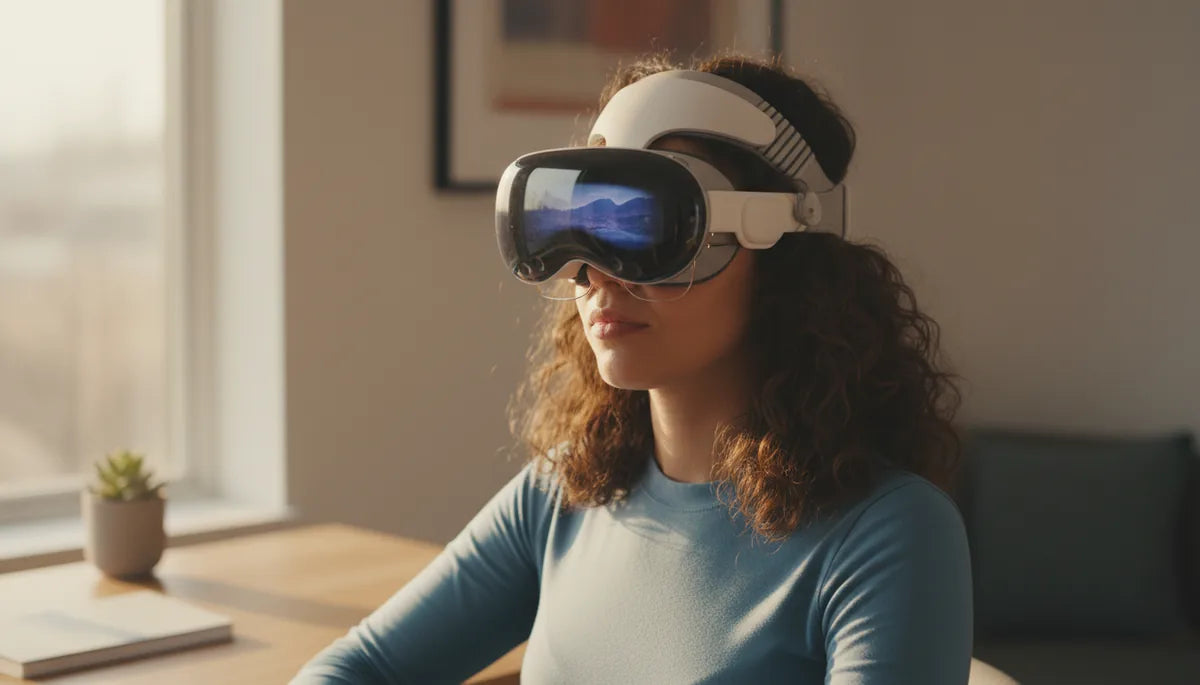
Wearing glasses in VR can be uncomfortable: frames press into your temples, lenses bump the headset optics, and the whole unit slips during active play. This practical, glasses-friendly guide shows how to fit an Oculus Quest 2 for pinch-free, slip-free long sessions. You’ll get geometry tips, strap comparisons, a step-by-step comfort-strap install, precise fit adjustments, stability techniques, weight-and-comfort strategies, maintenance advice, and accessory compatibility notes so you can play longer and enjoy VR without the headache. ⏱️ 11-min read
Glasses-friendly Quest 2 fit: geometry, clearance, and pinch risk
At its core, the glasses problem with the Oculus Quest 2 is geometry: the headset’s facial interface and lens housing sit close to the face, and glasses add extra depth and width in front of your eyes. Where that extra bulk touches the foam or the headset housing is where you feel pressure. Common pinch points are the temples where the arms (temples) of the glasses meet the foam gasket, the nose bridge area where both the headset and glasses press down, and the outer edge where thicker frames can contact the inner plastic of the headset housing.
Lens clearance matters for two reasons. First, if the glasses’ lenses sit too close to the Quest 2 lenses, you risk scratching or smearing — and an uncomfortable sensation from the glass-on-glass proximity. Second, if the temples have to squeeze between the headset gasket and your head, they create a focal pressure that's painful over time. The Quest 2 allows three discrete IPD (interpupillary distance) positions — typically 58 mm, 63 mm, and 68 mm — so using the correct IPD setting can reduce the need to push the headset forward or back, which in turn helps protect glasses clearance.
Not every frame is equal. Thin metal frames and narrow temples are the easiest to accommodate; they tuck neatly under the foam and reduce temple pressure. Wider acetate frames, thick sporty wraparound frames, or frames with large temple pads are more likely to hit pinch points. When choosing glasses to use in VR, favor smaller lens heights (less vertical bulk) and slimmer temple profiles. If you can, try different frames with the headset before settling — minimal contact with the foam and at least a finger’s width of clearance from the Quest 2 lenses are good cues that the frame will be comfortable.
Strap options for glasses wearers
The strap you use changes how the headset presses on your face. The stock Quest 2 elastic strap is lightweight and simple, but it can let the headset tip forward and concentrate pressure on the nose and temples. The official Elite Strap (and its iterations) and many third-party comfort straps redistributes weight toward the rear of the head and add a top strap or halo design to stabilize the unit. For glasses wearers, look for straps that offer both increased rear support and fine adjustments in angle and height — this keeps the headset from slipping forward and pinching your glasses.
Compare the main options: the stock strap is light (~elastic, minimal padding) and fine for short sessions or small glasses; the Elite Strap and similar padded designs add a rigid or semi-rigid rear band and thicker padding, which improves balance but adds weight near the back. Third-party designs vary widely: some use a halo or crown design (great for balancing without crushing the face), others add adjustable top straps and replaceable foam. For glasses, straps with a broad contact pad at the back of the head and an adjustable top strap are often the best choice because they let you dial out forward tilt without clamping the face gasket tighter.
Padded contact points matter. If your strap’s padding sits low near your ears or on the jawline, it changes how the headset sits and can push the facial interface harder into frames. Conversely, a strap that supports the skull high and centered reduces face pressure and keeps temples clear. When choosing, check product pictures and reviews for mentions of glasses-friendly design. Key terms to look for: “glasses spacer”, “thin facial interface”, “adjustable halo/top strap”, and “rear counterweight” — these indicate the maker considered glasses users.
Step-by-step install for a comfort strap
Installing a comfort strap is straightforward but doing it methodically reduces the risk of snapping clips or misaligning rails. Start by powering off the Quest 2 and placing it face-down on a soft cloth to protect the plastic and lenses. If you still have the stock elastic strap attached, you’ll remove it first: locate the two side anchors where the elastic inserts into the headset rails. Gently pinch or depress the release tab (some models have a small latch) and slide the elastic out. If the strap is sewn or glued, follow the manufacturer’s removal instruction — avoid prying plastic parts with metal tools.
Next, prepare the comfort strap. Many comfort straps come with a removable rear pad and rails that align with the Quest 2 side slots. Align the strap rails with the headset’s attachment notches and slide them in evenly on both sides until you hear or feel a click. Don’t force it: if you meet resistance, remove and re-check alignment. Make sure any rigid backband sits centered on the rear of the headset and that the facial foam of the strap lines up with the Quest 2 foam gasket — you may be swapping foam pieces depending on the design.
After physical installation, perform an alignment check before putting the headset on for a game. With the headset face down, verify the face gasket sits flush and the strap anchors are fully seated. If your comfort strap includes a top strap or crown pad, adjust it so that it doesn’t pull the front of the headset forward; the goal is to let the rear support carry weight, not to increase frontal clamp. Finally, don the headset slowly, make minor tension adjustments, and run a short 5–10 minute test where you move your head and mimic the motions of gameplay. Look for odd lean or pressure and correct the strap tension accordingly.
Glasses-friendly fit adjustments
Adjusting a Quest 2 for glasses is about three variables: strap height (where the headset sits relative to your ears), overall tension (how tightly the headset presses against your face), and nose-bridge clearance (how much space sits between your glasses and the headset). Start by loosening everything and sliding the headset onto your face. Use the top strap to set the vertical position — raise or lower until the display looks centered without needing to tilt your head. If you don’t have a top strap, adjust the rear band so the headset rides a bit higher rather than lower; higher positioning reduces temple pinch for many frame shapes.
Next, tune overall length/tension. With the headset in position, evenly tighten both side straps until the headset feels secure but not crushing. The correct balance feels supportive: the headset shouldn’t slide when you turn your head quickly, but you should be able to fit two fingers between the foam and your cheek at the widest point. If tightening causes temple pressure, try loosening and moving the top strap to lift the headset instead of increasing front pressure. For people wearing heavier frames, err on the looser side and use the rear pad or counterweight to keep the unit stable.
Practical testing prevents surprises. Bring three common frame types to your test fit: thin metal wire frames, medium acetate frames, and oversized fashion frames. Put each on and perform these checks: 1) Slide a finger between the temple and foam to confirm clearance; 2) Look up, down, and quickly left/right — the headset should remain stable without your glasses shifting; 3) Press forward lightly on the forehead area to simulate sudden movement — no pinching at the nose or temple should occur. If any frame contacts the plastic housing or presses uncomfortably into the foam, tweak strap height and tension until it’s relieved, or consider swapping to thinner frames or using a prescription lens adapter (see below for compatibility notes).
Stability and anti-slip techniques
Keeping the headset stable is the best defense against pinching. A stable headset does not need to be overtightened — it simply distributes forces across the skull so the face gets less pressure. Use a top strap or crown band to anchor the headset vertically and a rear strap to carry the weight. When both are tuned, the Quest 2 sits balanced and resists forward tilt. If your strap design lacks a top strap, consider upgrading to one that includes it or adding a small velcro loop for temporary top anchoring.
Surface friction helps. Some players add a thin silicone or faux-leather cover on the face gasket to increase grip between the headset and skin, which reduces sliding without increasing clamp. Be cautious: thick aftermarket covers can reduce the internal clearance and push glasses closer to the lenses — choose low-profile, slim covers designed for glasses. You can also add small non-slip pads to the rear strap or the inside of the halo band where it contacts hair or skin; these create anchor points that stop rotation without raising pressure on the temples.
Counterweights and battery packs are effective but need careful use. A 100–200 g counterweight mounted at the rear can offset forward-heavy headsets and reduce frontal pressure. Official battery-pack accessories double as rear counterweights and extend playtime, but they add mass that your neck must support. If you use a counterweight, lower the front clamp slightly and allow the rear pad to bear the load. Never over-tighten to compensate for extra rear weight — that increases pressure in different places and can cause headaches over long sessions. Balance, not brute force, is the goal.
Weight, balance, and long-session comfort
The Oculus Quest 2 headset weighs approximately 503 grams (about 1.1 pounds) without accessories — a relatively light baseline compared to many PC VR headsets that often weigh 700–900+ grams with built-in electronics. However, perceived comfort depends less on absolute weight and more on distribution: a front-heavy headset concentrates mass on the face and nose, while a balanced headset shifts it toward the back of the skull where larger muscles can carry the load comfortably over time.
To improve perceived comfort, prioritize distributing weight evenly. A padded rear strap or halo spreads the load across a broader area of the head, reducing pressure per square inch on the face. If you add accessories (battery packs, counterweights, prescription lens inserts), plan their position to preserve a front-to-back balance. Small changes — moving the rear pad a centimeter up or down, loosening the face clamp a notch, or adjusting the top strap — can dramatically change how long you can play without strain.
Session management is also essential. Even with perfect fit, human muscles fatigue. Schedule short breaks: industry guidance and user experience both point to 20–45 minute intervals as a comfortable window for many users, especially during physically active VR sessions. During breaks, stand up, roll your neck and shoulders, and briefly remove the headset to let your face and glasses reset. Additionally, maintain good posture: keep your head aligned over your shoulders rather than hunched forward, and use a supportive chair if seated play is common. These habits reduce neck strain and extend comfortable playtime.
Care, maintenance, and replacement options
Regular care keeps your glasses-friendly setup working well. Clean the facial foam and straps gently: for fabric and foam, use a slightly damp cloth with mild soap and air-dry; avoid soaking or using harsh solvents. For the plastic parts and lenses, use a microfiber cloth and, if necessary, a 70% isopropyl alcohol wipe gently applied to the plastic (not to optics) to disinfect. Remove and wash any removable fabric covers according to the manufacturer’s instructions. For prescription lens inserts, follow the lens maker’s cleaning guidance to avoid coatings damage.
Inspect straps, clips, and foam regularly. Look for fraying on fabric straps, thinning foam, brittle plastic at clip points, and loosening Velcro. Replace any component that shows cracking or persistent loss of elasticity — a failing strap can shift suddenly during use. For heavy users, consider replacing face foam every 6–12 months and straps every 12–24 months depending on wear. Keeping spare foam and a backup strap on hand avoids downtime and preserves hygiene when sharing the headset.
Replacement and upgrade prices vary. Basic third-party comfort straps can be found in the $20–$50 range; higher-end Elite-style straps or official Elite Strap models range from roughly $50–$130 depending on features (rigid support, battery pack included, or premium padding). Prescription lens inserts (snap-in or magnetic) typically cost $40–$120 depending on prescription complexity. Check warranty coverage: many reputable accessory makers offer 1-year limited warranties and return windows; buy from sellers that explicitly guarantee compatibility with Quest 2 and allow returns if the strap doesn’t fit your glasses profile.
Compatibility with third-party accessories and cross-device context
Most third-party Quest 2 straps attach using the same side-slot system the stock strap uses; makers design rails and anchors to fit those standard attachment points. That said, small differences in rail width or latch shape occasionally cause fit issues. Before you buy, verify product listings for “compatibility with Oculus Quest 2” (or Meta Quest 2) and examine customer photos and reviews from glasses wearers. If you have a uniquely thick or thin headset shell due to a protective mod or cover, double-check that the accessory’s rails clear any added material.
Prescription lens inserts are a practical alternative to wearing your glasses

Share:
Design and material choices that cut VR headset weight without sacrificing durability
Apple Vision Pro Versus Third Party Comfort Straps Pros and Cons and Compatibility