

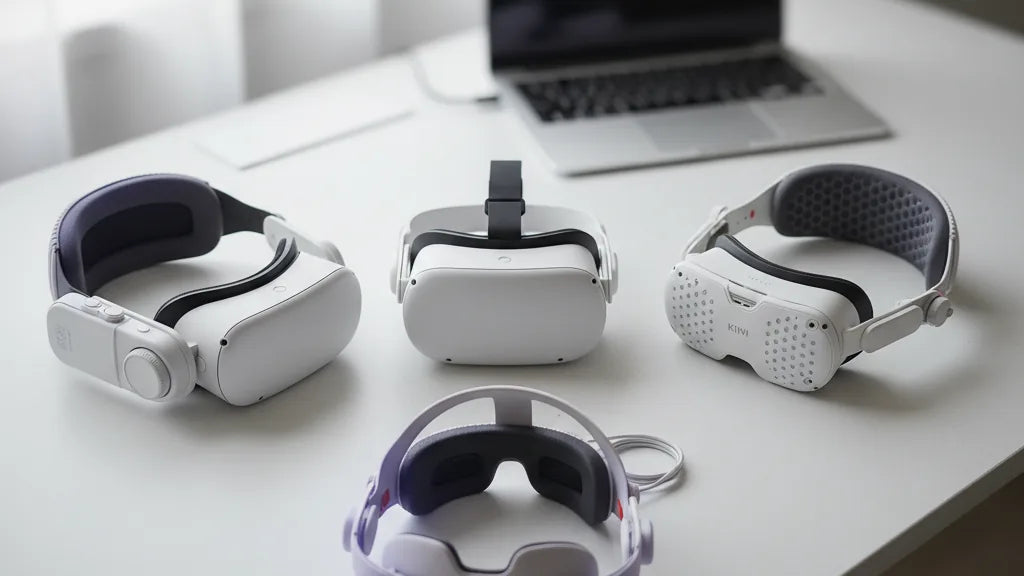
Which Quest 2 Head Straps Actually Make VR Comfortable: Real-User Tested Picks
If you love the content on your Quest 2 but dread the soreness after an hour, you’re not alone. The stock elastic strap is lightweight and simple, but it often creates pressure points, a front-heavy feel, and a wobbly fit that shortens play sessions. ⏱️ 10-min read
This guide distills real user experiences to show which third-party head straps truly deliver better comfort, stability, and longer playtime. You’ll get clear reasons to upgrade, hands-on insights into top models (BoboVR M2 Pro, KIWI Design Elite, GOMRVR Halo), practical fit advice, and step-by-step installation and care tips so your next VR session stays immersive instead of uncomfortable.
Why Your Quest 2 Deserves a Comfort Upgrade
The stock Quest 2 strap does its job for quick demos and portability, but its simple elastic design creates concentrated pressure on the face — especially the cheeks, nose, and forehead. That pressure, combined with the headset’s forward weight, makes the headset feel front-heavy; you end up supporting the device with your face rather than having it supported by your skull. The result is shortened playtime, distracted immersion, and neck strain during longer sessions.
Real users report that swapping to a well-designed third-party strap changes VR from an occasional hobby into a longer, more comfortable experience. The best replacements rebalance weight across the crown and back of the head, take pressure off the nose and cheeks, and lock the headset in place so quick head turns or active games don’t produce wobble. Beyond comfort, premium straps often bring better build quality and adjustment systems, so the fit remains reliable over months of use. If you value extended multiplayer sessions, streams, or long exercise-based experiences, upgrading the strap is one of the highest-impact comfort mods you can make.
Key Factors Real Users Prioritize in a Head Strap
Across forums, reviews, and long-session livestreamers, several consistent themes emerge when users talk about what makes a strap worth buying. The first is weight distribution and balance: halo and counterweight designs that relocate mass to the rear of the head reduce forward tipping and neck strain. Users report that a rear counterweight often feels like a night-and-day difference — less chin lift, fewer frequent adjustments, and steadier visuals during fast motions.
Material and padding matter as much as the strap architecture. Memory foam or dense foam cushions with breathable mesh are repeatedly praised because they soften contact points without trapping sweat. Durable stitching and reinforced connectors earn high marks, too; cheap plastics or weak buckles are a frequent complaint in budget buys. Adjustability mechanisms — dials, ratchets, or hinge systems — are valued when they provide smooth, tool-free tuning and a locking action that survives vigorous movement. Finally, longevity and serviceability: users prefer straps with replaceable pads, removable batteries, or a clear warranty. Even if a strap feels great day one, it needs to hold that fit after months of use.
Top Pick: BoboVR M2 Pro – The Halo Design Leader
The BoboVR M2 Pro consistently appears as a top recommendation from people who spend hours in VR. Its halo-style headband wraps the crown and sides, which redistributes weight away from the face and towards the skull. Users praise how that reduces pressure on the nose and cheekbones, making it friendlier for glasses wearers and less likely to cause smudging on lenses.
Two features stand out in real-world use. First, the integrated swappable battery mounts at the rear as a counterweight and extends playtime — reviewers emphasize the convenience of magnetic attachment and fast swaps without rebalancing. Second, the adjustment system is straightforward: height and tilt can be fine-tuned without tools, and the mechanism stays put during active play. The soft PU pads under the halo minimize hotspots and rubbing, which testers said made long sessions noticeably less fatiguing than with the stock strap. Installation is generally simple — clip in the side anchors, set the halo, and adjust with the dial — and users report a predictable, secure fit across a variety of head shapes. If you want a single upgrade that addresses both comfort and battery life, many users find the BoboVR M2 Pro the most practical pick.
Strong Contender: KIWI Design Elite Strap – Robust Comfort
The KIWI Design Elite Strap is often recommended for users who want the solidity of the official Elite Strap but at a friendlier price. Reviewers emphasize the strap’s sturdy construction: thick plastic frame, reinforced stitching, and robust connectors that feel like they’ll survive daily use. The key comfort wins come from wider, denser padding that spreads pressure across the temples and forehead rather than letting it concentrate on a few points.
In practice, users say the extra foam makes long sessions — an hour or more — far more comfortable than the stock strap. The fit remains secure even during quick turns and active games, thanks to a reliable locking or ratchet mechanism that keeps tension steady after adjustments. Several reviewers call out the KIWI strap’s consistent alignment: it doesn’t slip or require frequent repositioning, which saves time mid-session and prevents interruptions to performance or immersion. While it doesn’t typically include an integrated battery, the focus on build quality and dependable cushioning makes it a practical upgrade for gamers who prioritize stability and long-wear comfort without paying official Elite Strap premiums.
Budget-Friendly & Effective: GOMRVR Halo Strap – Value and Ergonomics
Not everyone wants to spend a premium on accessories, and that’s where the GOMRVR Halo Strap shines. For its price, users frequently report a surprising improvement in comfort over the stock elastic band. The GOMRVR uses a halo-style rear support that shifts weight back and reduces facial pressure, and while the materials aren’t top-tier, they’re competent for casual and frequent use alike.
Reviewers who picked this strap as a budget upgrade often cite two immediate gains: softer contact at the temples and a more even brow pressure that reduces irritation during marathon sessions. Adjustability tends to be simpler — dials or Velcro systems rather than precision ratchets — but effective enough to find a stable fit quickly. Durability is the trade-off to remember: lower-cost plastics and thinner padding may show wear sooner, but many users report months of regular use before noticing significant degradation. For casual players, travelers who need a light setup, or buyers who want a marked comfort improvement without breaking the bank, the GOMRVR Halo Strap offers strong value and ergonomics for everyday VR.
Other Noteworthy Straps and Specific User Needs
Beyond the big three, several other third-party straps address particular needs. For glasses wearers, look for straps with additional crown clearance or softer nose relief so your frames don’t press into your face. Models with adjustable temple relief or deeper eye pockets can make a measurable difference for people who wear prescription lenses inside VR. Some straps aim for portability: lightweight, foldable designs or slim low-profile options that slip into backpacks without bulk are ideal for travelers who prioritize compactness over heavy-duty cushioning.
There are also specialized options with modular components: detachable batteries, replaceable foam, or clip-on stabilizers for VR fitness. Competitive players sometimes prefer low-profile straps that reduce rotational inertia for faster head tracking, while streamers or content creators often favor halo designs with rear counterweights for stable camera-facing positioning and long-stream comfort. When choosing, match the strap features to your primary use — heavy movement and fitness need better locking and balance, while passive watching or travel favors lightness and packing convenience.
Choosing Your Perfect Fit: Personalizing Your Quest 2 Comfort
“Best” is personal. Your head shape, the type of VR you play, whether you wear glasses, and how long you plan to play should determine the strap you pick. Start by identifying your priorities: Do you need extended battery life, secure fit for active titles, or a compact travel-friendly solution? If you’re a heavy-duty gamer or streamer, prioritize halo designs with rear counterweights and reliable ratcheting adjustments. If you’re a casual player who values portability, a slim padded strap can still beat the stock band for comfort without extra weight.
Try to measure or estimate your head size; straps that provide sizing guides or adjustable ranges reduce the chance of a poor fit. Read multiple independent reviews for people with similar head dimensions and eyewear needs. Look for straps that allow micro-adjustments (dial systems) if you switch between users often. If possible, buy from vendors with a clear return policy so you can test fit for 30 days — fit sensations are subjective, and small differences in crown pressure or nose gap can make or break the experience. Finally, think about maintenance: removable pads and washable materials prolong comfort and hygiene, which many users appreciate after sweat-heavy VR workouts.
Installation and Maintenance for Lasting Comfort
Installing a third-party strap correctly is essential for achieving the promised comfort. A few careful steps will prevent common fit problems and keep your strap performing well longer. Typical installation goes like this:
- Remove the stock strap: unplug or unclip the elastic straps completely so the headset’s anchor points are accessible.
- Align and attach side clips: match the third-party clips to the headset anchors; press or screw them in until they sit flush. Confirm each side is even to avoid tilt.
- Set the rear/halo support: position the main rear band so it sits across the lower crown, not too high. The band should cradle the head and center the weight.
- Fine-tune balance and tilt: loosen the dial or hinge, put on the headset, then tighten gradually until the weight feels distributed and the display is centered. Avoid overtightening; comfort is a balance.
Maintenance: wipe PU or foam pads with a damp cloth and mild soap after sweaty sessions, and let components air dry. For fabric pads, check whether they’re machine-washable; if not, hand wash. Inspect connectors and stitching periodically; replace pads or batteries when performance drops. If your strap has a detachable battery, recharge and store it separately to prevent battery drain or swelling. With reasonable care, a quality third-party strap should remain comfortable and functional far beyond the stock strap’s lifespan.
Real User Examples and Practical Takeaways
Concrete examples help translate features into daily benefits. A long-session streamer who switched to a halo strap reported much less neck strain during four-hour streams; the headset sat closer to the back of the head and required fewer mid-stream adjustments. A user with a small head found a highly adjustable strap with flexible side clips and height adjustment solved constant slippage — it stayed centered even during fast arena shooters. A budget buyer who went for an inexpensive padded strap noted an immediate improvement: the temples and brow felt softer, allowing gaming for longer stretches without the previous irritation. A traveler prioritized a foldable, low-profile strap and accepted less plush padding in exchange for compact storage and reduced carry weight.
These stories show one consistent truth: the right strap is the one that matches your use case. If you stream or play competitively, invest in stability and build quality. If you want better comfort without much extra cost, a budget halo strap will often be a clear upgrade. If battery life is a limiting factor, choose a strap with an integrated or attachable power pack so comfort and runtime improve together.
Buying Checklist and Practical Next Step
Before you click “buy,” run through this quick checklist that reflects what real users say matters most:
- Balance & weight distribution: does the strap shift mass to the rear or crown to reduce facial pressure?
- Padding & materials: is the foam dense and breathable? Are pads replaceable or washable?
- Adjustability: does it offer fine tuneable dials, reliable locks, or easy one-handed adjustments?
- Build quality: are connectors reinforced and materials durable? Is there a warranty or clear return policy?
- Extras: integrated battery, modular parts, or travel-friendly folding if those features matter to you.
- Real-world reviews: read multiple user reports from people with similar head sizes and use patterns.
Next step: pick the feature that will most improve your sessions — stability, longer battery life, or portability — and choose a strap that prioritizes it. If you’re undecided, start with a well-reviewed halo strap (like the BoboVR M2 Pro) for balanced comfort, or the KIWI Elite-style option for durable, long-wear cushioning. Try it for a week; if it doesn’t match your expectations, a vendor with a good return policy will let you test another style until you find your perfect fit.

Compartir:
Quick troubleshooting for uneven pressure when adjusting Quest 2 comfort strap height
The best Quest two straps for long gaming sessions: comfort, support, and weight distribution